
Induction Heating for Tube & Pipe
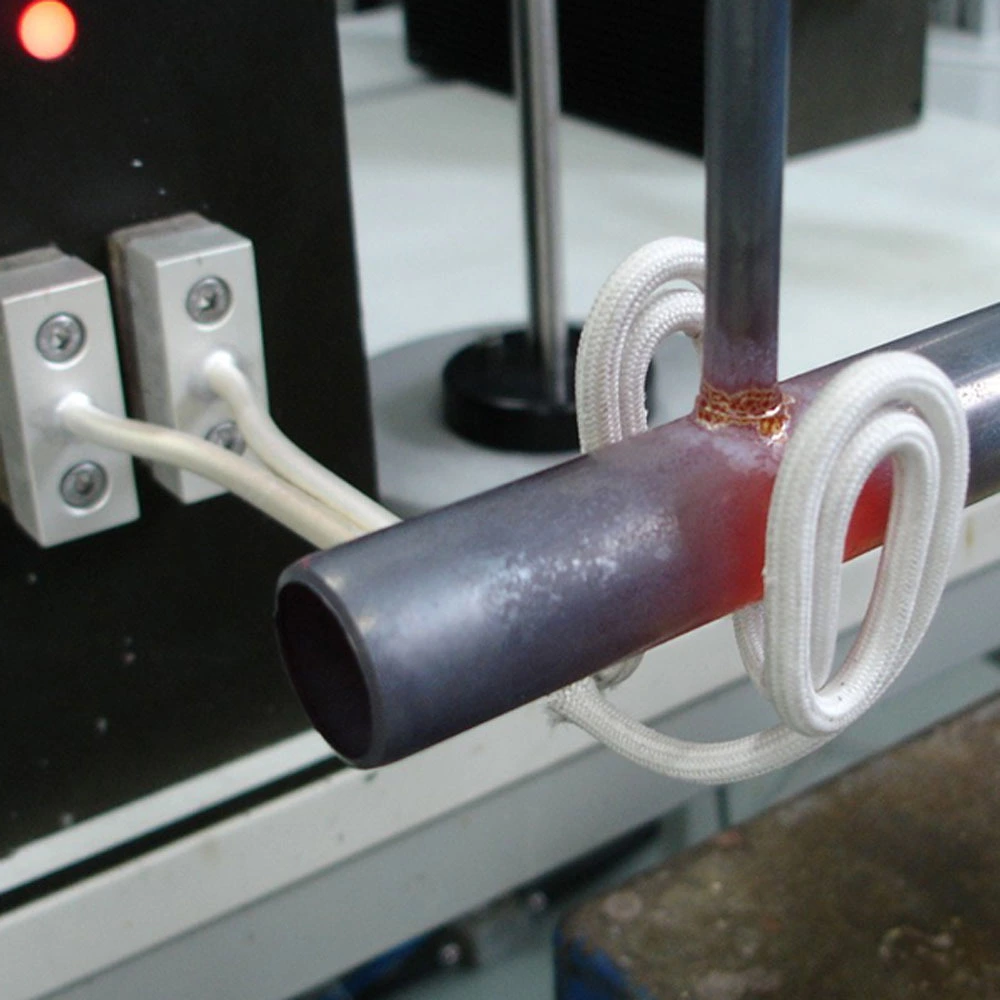
Precise, Repeatable Thermal Processing: The Induction Advantage Over FlameInduction heating works by passing alternating current through a work coil positioned near a conductive material. That current generates a dynamic magnetic field, inducing localized eddy currents at the material’s surface, a phenomenon known as the skin effect. The heat then penetrates the workpiece via thermal conduction. For tube and pipe manufacturing, this provides a highly repeatable, targeted, and controllable thermal profile, eliminating the process variability common to torch-based methods.
Applications for tube and pipe span a wider range of processes than brazing alone. Induction is used for preheating before welding, post-weld stress relieving, bending and forming, annealing, and shrink fitting, as well as brazing where the application calls for it. Each process puts different demands on the equipment, and the right configuration depends on the pipe's diameter, wall thickness, material, and the temperature profile the application requires.
Advantages of Induction Heating for Tubes and Pipe
Compared to torch or resistance-based heating, induction offers real, measurable advantages for large-diameter pipework:
- Uniform heat penetration: Properly tuned frequency and coil design bring the full wall thickness to temperature, not just the surface.
- Unmatched Precision & Repeatability: Unlike the manual variability of torch heating, induction delivers highly localized, digitally controllable heat cycles. This ensures identical thermal profiles across every tube and pipe run.
- Rapid Thermal Efficiency: Instead of transferring external heat from a flame onto the metal surface, induction generates heat directly within the workpiece itself, drastically reducing cycle times and energy waste.
- Enhanced Metallurgical Quality: Precise temperature control eliminates the risks of overheating, uneven grain growth, or localized structural weakness often caused by erratic flame applications.
- Superior Workplace Safety: By eliminating open flames, explosive gas lines, and ambient radiant heat, induction creates a significantly safer, cooler, and more compliant manufacturing environment.
- Reduced Surface Oxidation: The rapid, targeted nature of induction heating minimizes the material's exposure to high temperatures, reducing scaling and oxidation, which lowers post-process cleanup costs.
- Documentable process control: Power, time, and temperature settings can be logged and repeated, supporting quality audits on critical infrastructure.
Common Induction Heating Applications for Tube and Pipe
- Preheating for welding: Bringing pipe up to a specified temperature before a weld pass reduces the risk of cracking and improves weld quality, especially on thicker-wall or higher-carbon material.
- Stress relieving: Post-weld heat treatment relieves residual stress built up during fabrication, which matters for pipe that will see pressure cycling or thermal cycling in service.
- Bending and forming: Localized induction heating softens a section of pipe just ahead of the bend die, allowing tighter radii without wall thinning or ovality issues.
- Shrink fitting: Uniform heating of a pipe section or collar allows for a controlled, repeatable shrink-fit assembly, without the guesswork that comes with an open flame.
- Large-diameter flange and coupling work: Where oversized tubing needs to reach a controlled temperature across its full cross-section, not just at a joint line.
A Growing Application: Cooling Pipe Networks in AI Data Centers
One of the fastest-growing applications for induction pipe heating is in AI data center infrastructure. These facilities run miles of large-diameter copper and stainless piping to move coolant through server racks and central cooling plants. A significant portion of that pipe network involves field welds, bends, and mechanical assemblies throughout the installation. Pipe sections get bent into position, preheated ahead of field welds, stress-relieved after welding, and in some cases shrink-fit to collars or supports before a fitting is ever joined.
Torch-based methods struggle in this environment for familiar reasons: inconsistent heat, operator-dependent results, high failure rate, and no practical way to document or repeat the process across a facility with thousands of feet of pipe. Induction heating provides contractors with a controlled, repeatable process for every heating step in the cooling loop, with settings that can be logged and verified across the full scope of a project.
Built for the Part, Not the Other Way Around
We work directly with fabricators, contractors, and infrastructure engineers to size and configure equipment for large-diameter pipe heating, whether that's preheat, stress relieving, bending, or shrink fitting. Our team provides application testing to confirm frequency, power, and coil geometry before you commit to a system, and we design automated setups for shops running high volumes of pipe through a repeatable process.
If your project involves tube or pipe heating, contact our team to discuss your application, and we will help you determine what equipment fits the job. Contact our team to talk through your induction pipe heating application, or request a demo to see how our equipment handles large-diameter pipe in person.